vinyl
The Perfect Vinyl
Turntable
Setup

Home, Office, and Beyond
There’s something undeniably magical about dropping a needle onto vinyl. In an era of streaming services and infinite digital catalogs, vinyl records have experienced a remarkable resurgence. What once seemed destined for dusty thrift store bins has become the fastest-growing physical music format, with sales climbing year after year. But why? In a world where we can access any song in seconds, why are people investing in turntables, speakers, and record collections?
Disclosure: This post contains Amazon affiliate links. If you buy through them, I earn a small commission at no extra cost to you, and it helps pay for this blog, my AI newsletters, and the podcast. I only recommend gear I actually use.

The Vinyl Resurgence:
Why Records Are Back
The comeback of vinyl isn’t nostalgia alone. It’s a deliberate rejection of convenience for quality. Streaming culture has given us unlimited access to music, but in doing so, it’s treated albums like buffets where individual songs are sampled and discarded. Vinyl forces intentionality. You can’t shuffle while making breakfast or endlessly skip ahead. You commit to an album, and the album commits to you.
Beyond philosophy, there’s tangible appeal. Vinyl records contain more audio information than most compressed digital files. The warmth and character many describe in vinyl sound comes from the analog format itself. The physical vibrations of the needle reading grooves create a listening experience that digital reproductions, no matter how high-fidelity, often struggle to match.
What I like about owning them
Ask any vinyl enthusiast why they choose records over streaming, and you’ll hear recurring themes.
The Listening Experience: Vinyl demands presence. Without the ability to endlessly scroll through playlists, listeners sit with albums from start to finish. This creates a deeper engagement with an artist’s intended vision. Albums are sequenced with intention: the opening track, the flow, the closing statement.
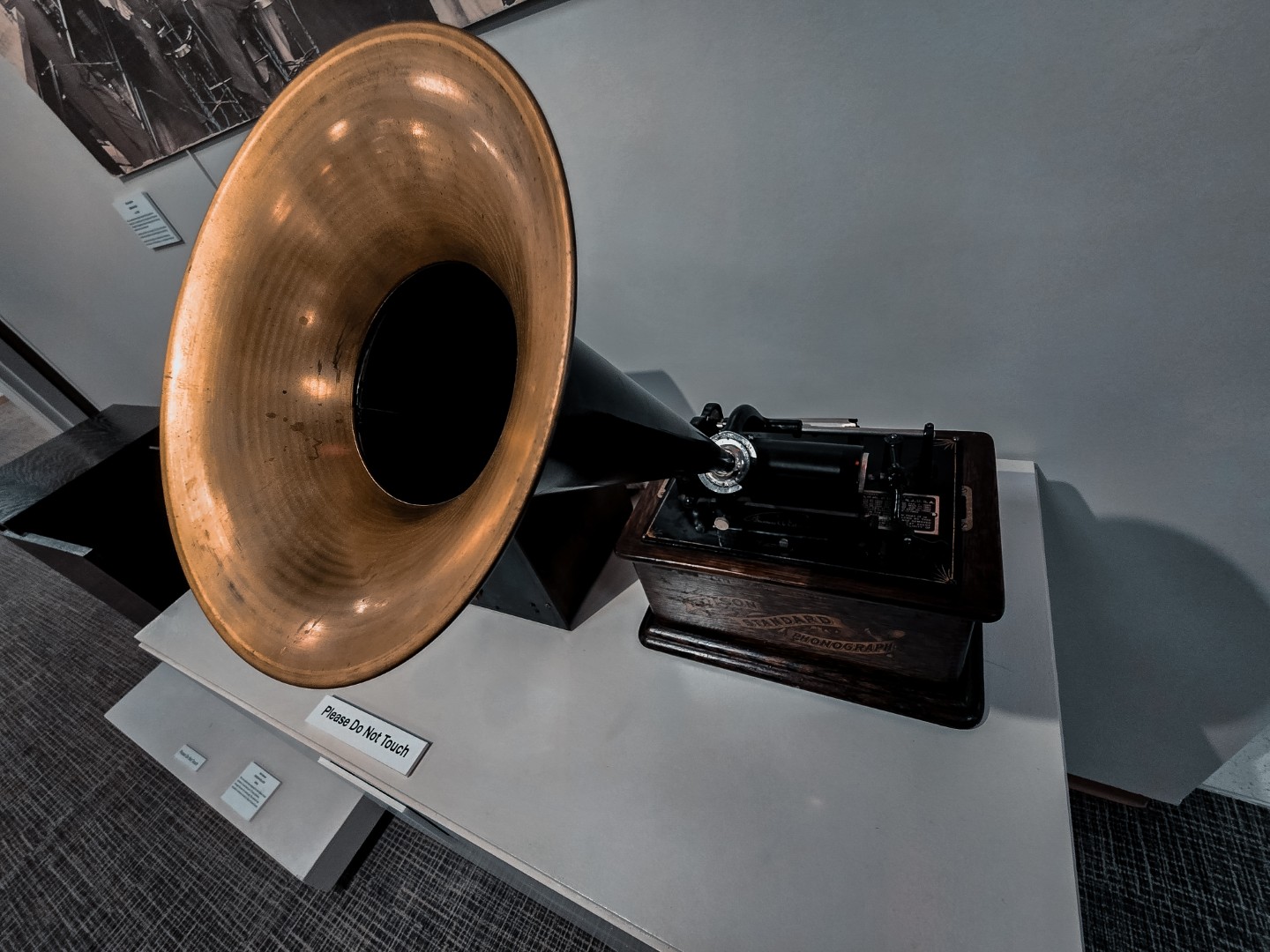
Album Art and Liner Notes: A 12-inch square canvas is a gallery. The typography, photography, artwork, and design on vinyl covers represent centuries of artistic tradition. Gatefolds open to reveal full track listings, credits, lyrics, and sometimes essays about the creative process. There’s tactile beauty in holding a record, reading the credits, seeing the artist’s vision presented as a complete work.
The Ritual: Pulling a record from the shelf, reading the spine, sliding the album out, examining both sides of the cover, placing it on the turntable, dropping the needle. It’s ceremonial. In our lives of infinite choice and immediate gratification, this ritual is grounding.
Collectibility: Vinyl collecting is experiencing a true renaissance. Limited editions, colored variants, reissues of classic albums on 180-gram audiophile pressings. Collecting vinyl feels meaningful in ways streaming playlists never could.
Building Your Vinyl Setup:
The signal chain
;Creating the perfect turntable setup requires understanding the chain: turntable → preamp/receiver → amplifier → speakers.
The turntable itself is foundational. You need something with good tracking force, minimal wow and flutter, and maybe a built-in preamp for flexibility. Quality speakers are non-negotiable; they’re what you actually hear. An amplifier drives those speakers with clean power. A receiver can integrate everything. And cables, often overlooked, should be of decent quality to avoid noise.
But the “perfect” setup is deeply personal. It depends on your room, your budget, your taste, and how you want to listen.
Wow and flutter are unwanted variations in the speed of a turntable’s platter. Wow refers to slow speed variations, while flutter describes rapid ones. Together, they cause pitch instability that degrades the listening experience.
My Home Setup:
The Reference System
My home turntable setup is my centerpiece listening experience. It’s the system I return to when I want to really hear my music.
Turntable: Fluance RT85 with Ortofon 2M Blue cartridge. This turntable punches well above its price point. It has an acrylic platter, a heavy MDF plinth, and good vibration isolation, and it performs well above what it costs. The 2M Blue cartridge is detailed without being harsh.
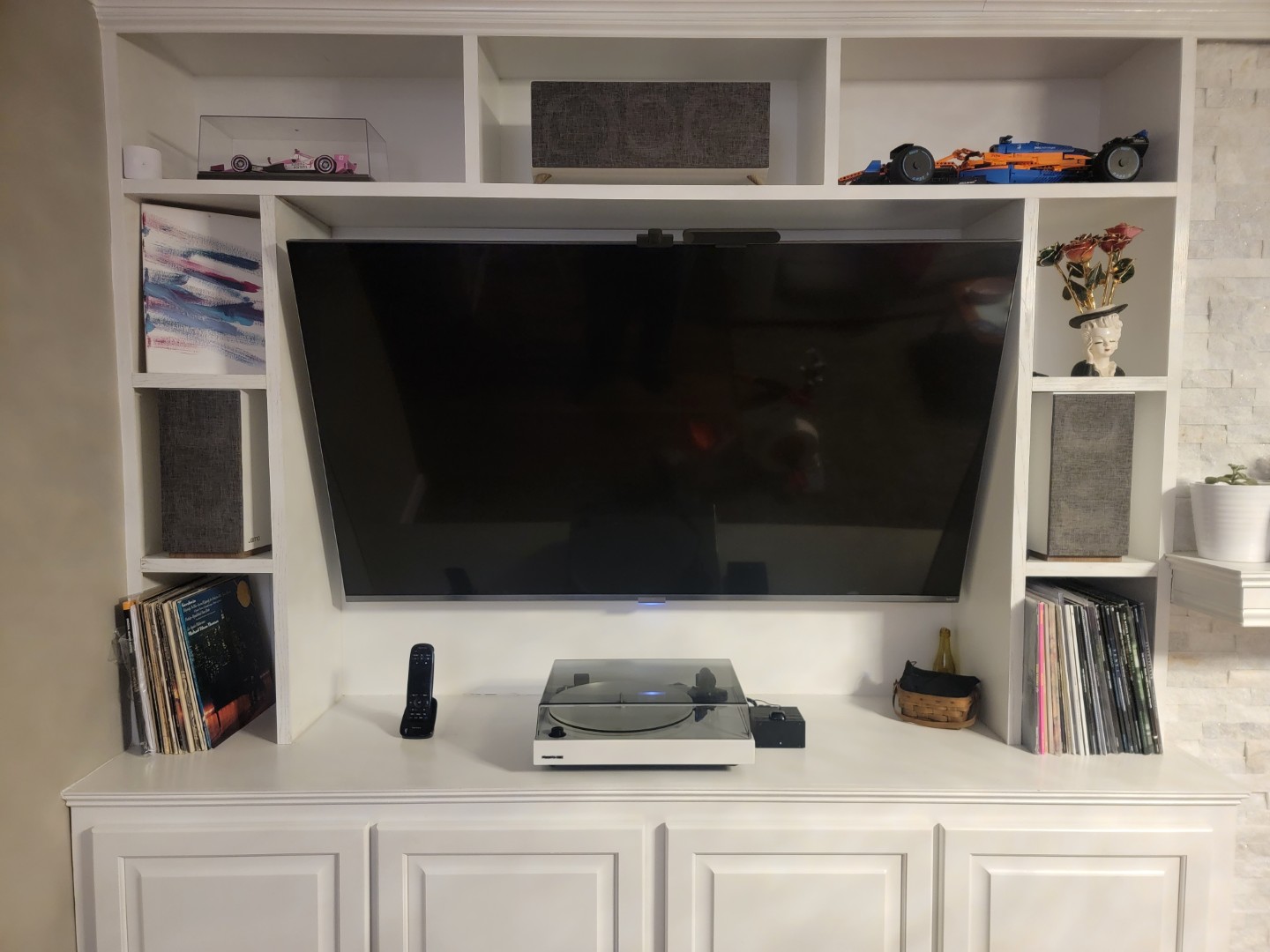
The Amplification: Fluance PA10. To handle the turntable signal, I’ve paired it with the Fluance PA10 High Fidelity Phono Preamplifier. This dedicated preamp provides pristine signal conversion with RIAA equalization, allowing me to bypass any mediocre built-in preamps and send a clean, amplified signal directly to my receiver. The PA10 achieves incredibly low 0.5 dB RIAA deviation and keeps distortion ultra-low for exceptional clarity.
I’ve also integrated the Onkyo TX-SR393. It’s a home theater receiver, not a stereo amp. This is a full-featured home theater receiver with much more flexibility than a simple stereo amplifier. It delivers 80 watts per channel at 8 ohms with authentic high-current analog amps backed by a custom transformer.
The Speakers: Jamo S 803 bookshelf speakers. My speaker choice is critical to the home system’s character. I’m using the Jamo S 803 Bookshelf Speakers as my primary monitors. The S 803s have a soft-dome tweeter and a 5-inch woofer, and they sound big for their size. Vocals feel close, and drums have some weight. If you want them to match your room better, Jamo also makes a walnut finish.
The result is a cohesive, room-filling sound that allows every pressing to breathe. Vocals are intimate, drums have weight, and the soundstage opens up. When I drop a needle on a great-sounding pressing, the entire system reveals the care taken in both the recording and the pressing.
My Office Setup:
Office: Small, flexible, & quieter
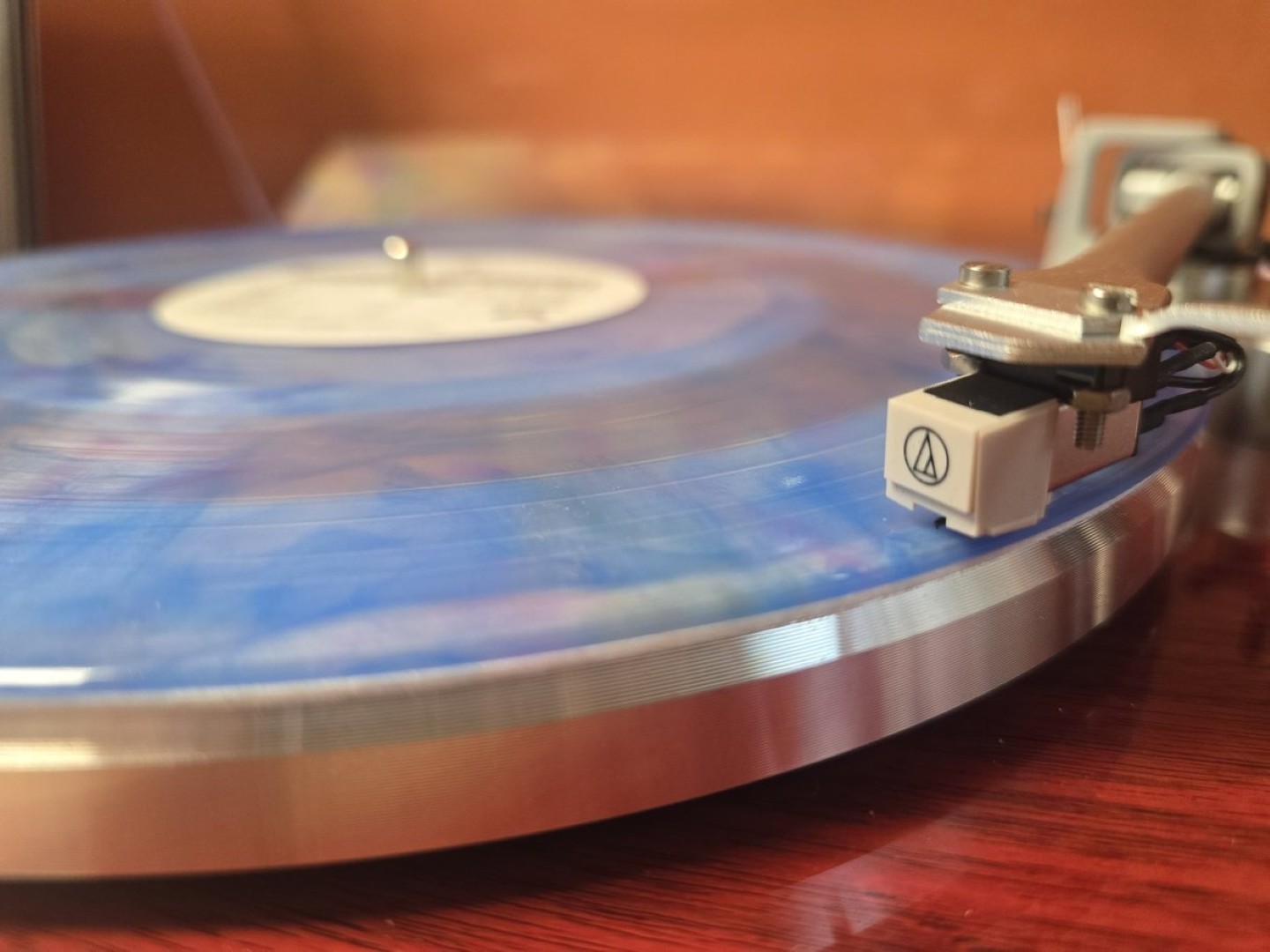
Turntable: 1 by ONE belt-drive. It has Bluetooth, a USB output, and a built-in phono preamp, plus a balanced tonearm with anti-skate and 33 1/3 and 45 RPM speeds.
The Bluetooth is a good starting point. If you want to hear records now and don’t own wired speakers yet, you can pair it with a Bluetooth speaker you already have. I think wired is better, though. A real amp and passive speakers sound clearer and fuller, and once you hear the difference, it’s hard to go back.
The USB output means you could encode your records to MP3 on a computer. I haven’t done that and don’t plan to, but it’s nice to have if you want a digital copy of something rare.
Speakers and amp: Edifier P17 passive bookshelf speakers driven by a Pyle home channel amplifier. The P17s have a silk-dome tweeter and a 4-inch driver, and they sound better than their size suggests.
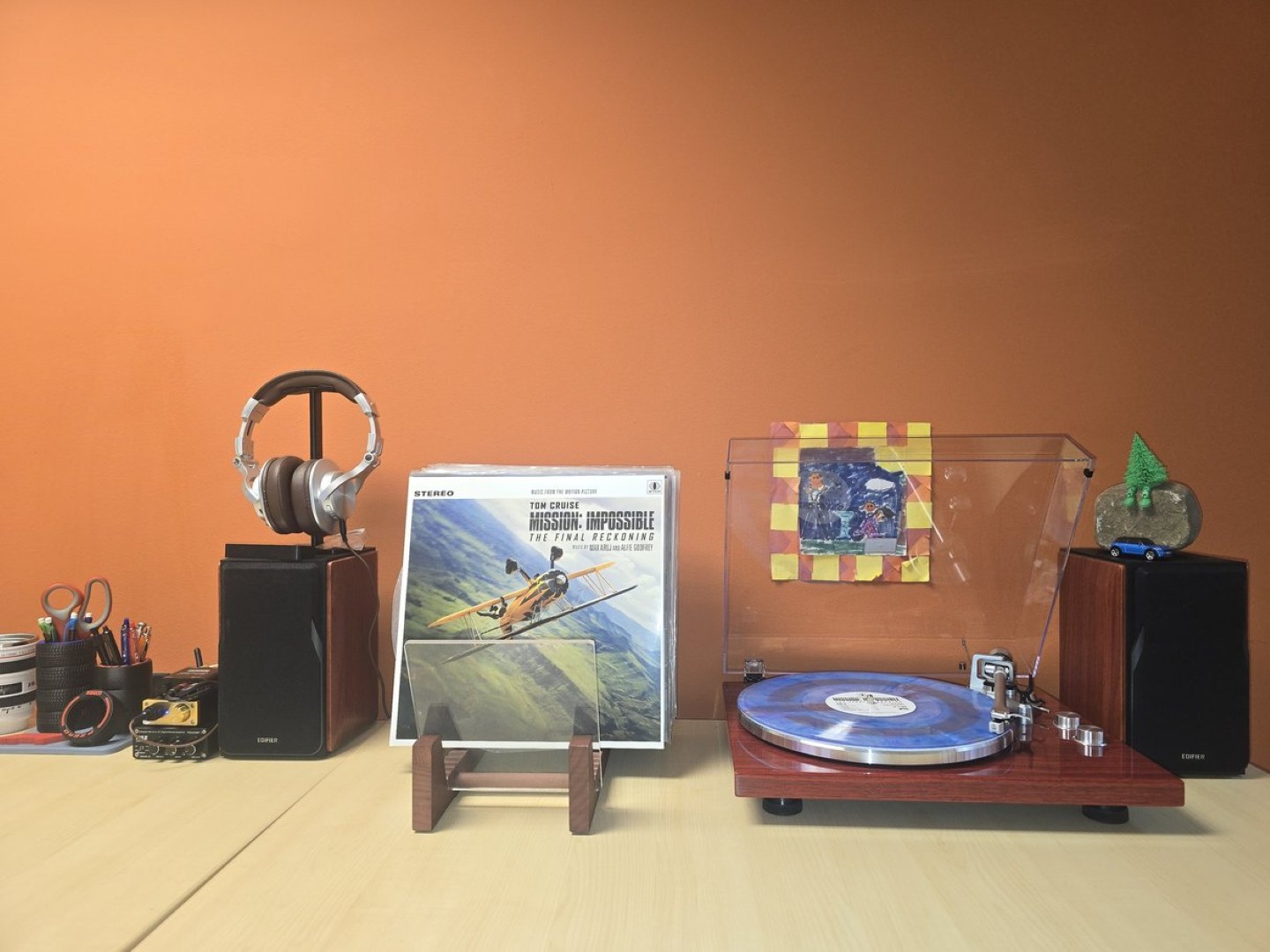
Headphones: A headphone amp switcher lets me flip between the speakers and an Audient Sono headphone amp. Headphones come out when someone else is working nearby or I want to get lost in a record.
Cables: I use decent interconnects and a few specialty cables. With multiple inputs and outputs, bad cabling is where you’d hear hum.
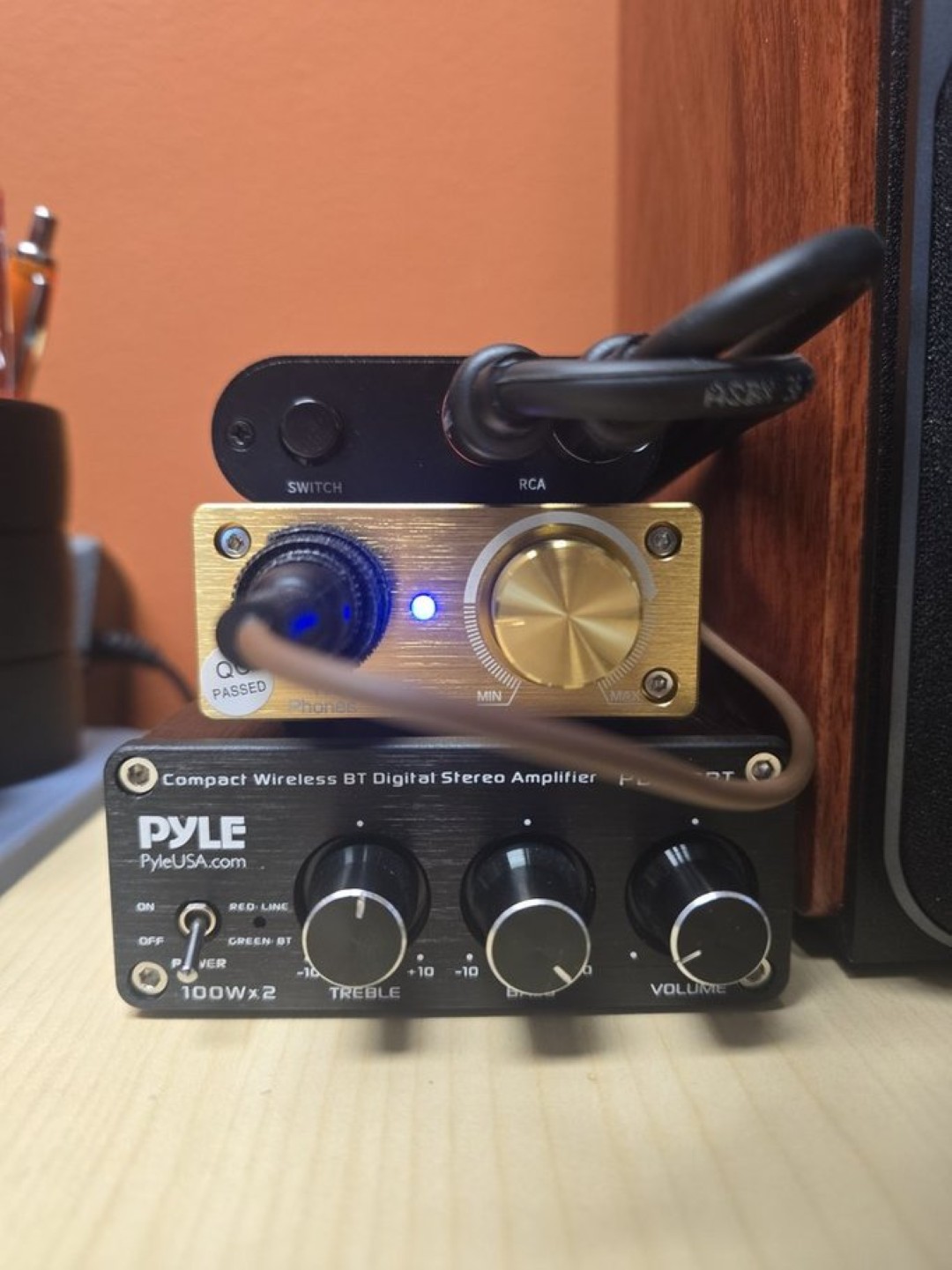
Some days I want music in the room while I work, and other days I want headphones on. This setup handles both.
Your Own Setup:
Building yours
A few things I’d tell anyone starting out:
- Start with the turntable. Everything downstream depends on it. You don’t need the most expensive one, just one you trust.
- Spend on speakers. They’re what you actually hear, so this is where extra money pays off most.
- Match the amp to how you listen. A simple integrated amp works great for stereo. A receiver gives you more inputs if you also watch movies.
- Don’t skimp on cables. You don’t need the fancy ones, just decent ones.
- Fit the system to the room. A desk setup doesn’t need the power of a living room rig.
Explore options and get inspired by other setups by looking at RecordBuilds. Create your own setup, or pick one that someone already made, and fill your cart with the same equipment!
Mostly, build something you’ll want to use. The best setup is the one that gets you to pull records off the shelf.
The
Future of Vinyl
I don’t think vinyl is going away. You don’t need to give up streaming or any other technology to enjoy it. Pick a setup that fits your room and budget, whether that’s a turntable with powered speakers or a full component rig like my living room system, and start with an album you love.

Read more about what I have to say about AI on my Substack.