I’ve been scanning races at IMS for years, and every time I hand a scanner to someone new, it goes the same way. Three laps in they get it, and they want to know why they sat through so many races without one.
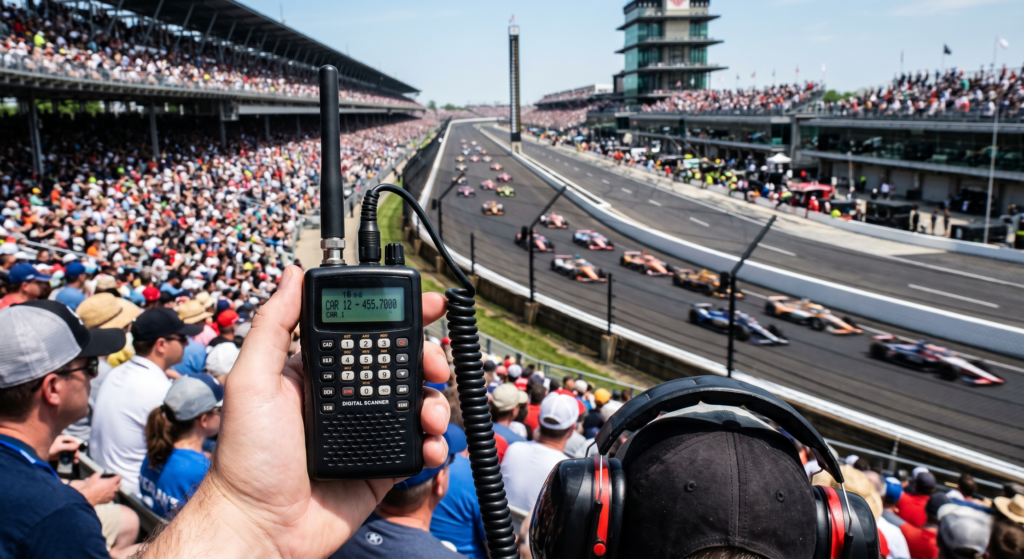
From the grandstands, the 500 is a great show, but it’s also 200 laps of cars going past a fixed point. A scanner turns that into a race you can actually follow. You get your driver, their spotter, and their engineer in your ear, working traffic, calling fuel numbers, arguing about tire wear, deciding when to push and when to save. You hear the strategy before it plays out on track. When something goes wrong, you usually catch it on the radio before the broadcast does. Park on one driver for a stint, jump to the leader, then go listen to a fight happening nowhere near your seat.
I started putting up tips, tutorials, and frequency lists on my personal site over 10 years ago, and it grew and grew in popularity. So, a few years back, I moved it all to IndyCarFreq. I wanted more people in the hobby, and I wanted one frequency list that’s accurate and current, so nobody shows up race morning running last season’s numbers. Driver and team freqs for the 110th running are posted and kept current here: https://indycarfreq.com — I update this before every single race of the season (but get 70% of my traffic this weekend!)
Don’t own a scanner yet? I saw this morning, as of 8 am, you can order one on Amazon and have it tomorrow. (so hurry!) A decent Uniden Bearcat covers everything you need at IMS, and you can grab one locally or have one in hand before Sunday. I wrote a plain guide on which model to get and how to set it up so you’re ready before the green flag: https://racingfreq.com/bearcat-guide
It takes a bit of effort to get into. It’s worth it. Do one 500 with a scanner and you won’t want to do another without. Questions about gear or setup, ask away. Happy to help.

Read more about what I have to say about AI on my Substack.