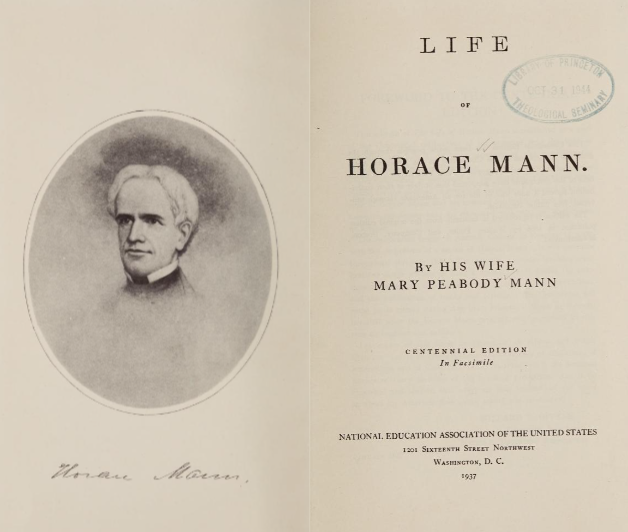
Mary Peabody Mann’s 1865 biography, “Life of Horace Mann,” offers an intimate portrait of her husband’s rise from rural poverty to educational reformer, drawing on personal letters and observations. Written after his 1859 death, the book counters critics by emphasizing his moral convictions, family tragedies, and dedication to public good. It remains a key primary source for understanding the “Father of American Education.”
Book Overview
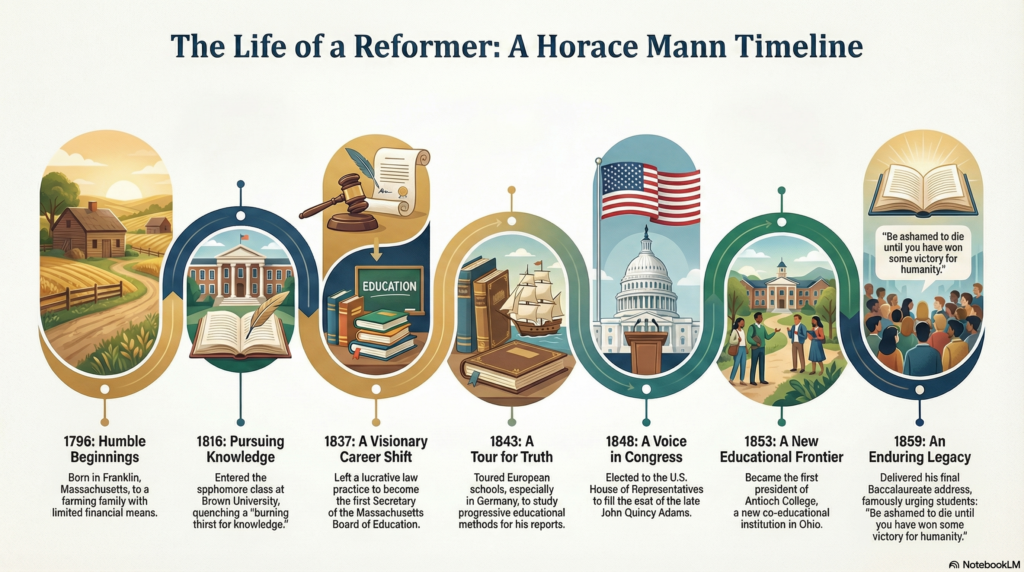
The narrative spans Horace Mann’s 1796 birth in Franklin, Massachusetts, to his final years, highlighting his rejection of harsh Calvinism after brother Stephen’s drowning and first wife Charlotte’s death. Mary details his self-taught path to Brown University Law, Massachusetts legislature Service, and Board of Education secretary role, where he championed free, non-sectarian schools. Structured chronologically with appendices of speeches, it blends memoir and defense.
Key Insights
- Family Roots: Depicts parents Thomas (farmer) and Rebecca Stanley’s modest life, fostering resilience amid loss.
- Personal Evolution: Traces shift from grief to optimism, influencing reforms like normal schools and asylums.
- Intellectual Circle: Notes ties to Peabody sisters, including Elizabeth’s transcendentalism and Hawthorne’s marriage.
Why Read It
This firsthand account humanizes Mann’s legacy, revealing vulnerabilities behind his reforms during America’s industrial shift. Accessible via public archives, it enriches ancestry explorations like those tracing colonial forebears.
These copies came from The Internet Archive.

Read more about what I have to say about AI on my Substack.